Archived entries for Modern architecture

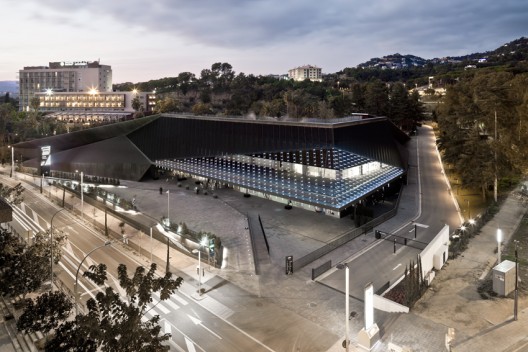
Gran Casino Costa Brava

The Gran Casino Costa Brava is located in the old gardens of the Grand Hotel Monterrey, in the center of Lloret de Mar (Girona), and is based on a singular architectural and environmental study signed by the b720 Arquitectos, led by Fermín Vázquez .

Continue reading…

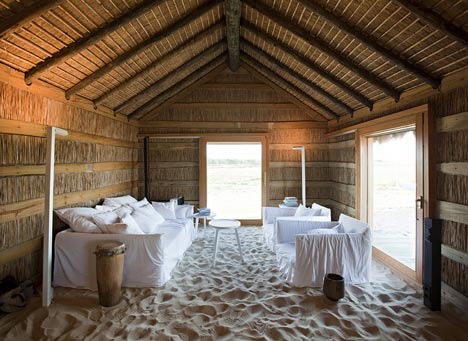
Sand House by Aires Mateus Architects

Called Casa Areia, the project comprises seaside accommodation made of wooden frames covered in natural fibres.

Continue reading…

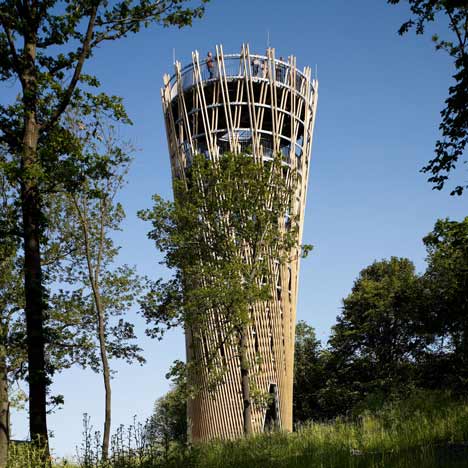
Wooden observation tower in Hemer, Germany.

Birk, Heilmeyer, Knippers Helbig have completed this wooden observation tower in Hemer, Germany.

Obra de Birk, Helmeyer y Knippers Helbig, este observatorio de madera se levanta con mucha personalidad en Hemer, Alemania.

Continue reading…

Joshua Tree por Hangar Design Group

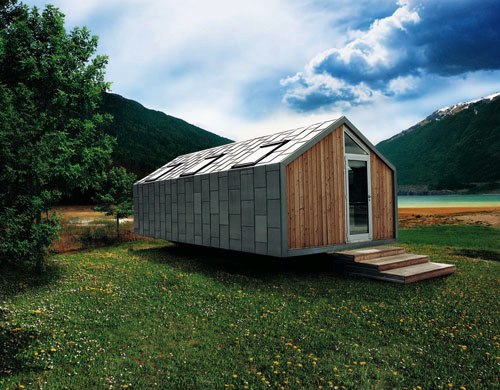
Joshua Tree es una cabaña alpina que tiene cubierta a dos aguas capaz de soportar el peso de la nieve, con un acabado interior más rústico en paneles de madera, grandes ventanas cenitales para aprovechar bien la luz natural, y acabado exterior en chapa metálica.

Joshua-Tree-by-Hangar-Design-Group-archiblock

More photos at bottom / Mas imágenes al final

Joshua-Tree-by-Hangar-Design-Group-archiblock_003

Vía  design-milk.com

Con una clientela sofisticada y exigente en mente, esta casa móvil diseñado por Hangar Design Group invierte la concepción del concepto de temporalidad efímera tradicionalmente ligada a las estructuras prefabricadas, a fin de presentar un verdadero micro-house, capaz de ofrecer soluciones funcionales con un contenido de alto diseño.

En consonancia con las tendencias contemporáneas de la vida nómada, esta casa móvil ha sido concebido para ser flexible, reversible y personalizado. Al mismo tiempo Joshua Tree es capaz de interpretar las necesidades vitales de un hogar permanente con recurso de casación, a partir de un esquema planimétrico muy racional, donde hay espacio para todo: no sacrificar ninguna de las funciones de un hogar permanente, y incluye áreas comunes de vida (cocina y salón comedor), el espacio para el descanso y el bienestar (dormitorios y baños) o relajación (terrazas), dando formas y funciones para adaptarse a diferentes estados de ánimo.

Diseñado para ser completamente construido en la fábrica, como un verdadero producto de diseño industrial, Joshua Tree también incorpora elementos de automatización del hogar que aumentan su potencial en términos de gestión y tecnologías de control para las ventanas, aire acondicionado y de calefacción, si existen, con el fin de obtener una mayor comodidad y el consiguiente ahorro de energía.

Un aspecto absolutamente nuevo es también la contextualización territorial que ofrece el producto, lo que pone a la arquitectura – ratio primer entorno – de una manera nunca antes vista en el segmento de casas móviles, y el diseño de los anclajes a la vista morfológico vinculados con el tipo que fue escenario concebidos. Por lo tanto el estado de ánimo, el concepto visual considera como por su funcionalidad como un tema crítico.

Joshua Tree es la casa móvil concebido para unas vacaciones a una altitud elevada, sino que recupera el perfil de un refugio de los Alpes, con su cubierta inclinada y vistas panorámicas de los picos, lo que hace recordar la montaña “baita”, también gracias al uso combinado de evitar la madera que cubre su alma cálida en el interior.

El tipo de mobiliario es elegida para crear un código de estilo con un fuerte impacto y los elementos reconocibles caracteriza por líneas limpias, estilo moderno y la atención al detalle.

La cubierta externa sorprendentemente interpreta la mezcla tecnológicas utilizadas en los materiales: acero, zinc y titanio forman grandes placas empleando el método tradicional de tejas de madera. Con el tiempo el material se oxida, dando a la estructura de una tonalidad más opaca, que se adapte mejor el paisaje cubierto de nieve.

Desde el interior, los amplios ventanales que la preciosa vista de los picos cubiertos de nieve. La calidez de la madera crea un ambiente único, acogedor. Una versión reinterpretada de la vivienda de montaña, un refugio de montaña ideal para familias jóvenes o parejas: una estructura metálica continua combinada con un interior único realzada por la calidez de la madera natural.

Creada para dar cabida a 3 a 4 personas, Joshua Tree no sacrifica la comodidad de suficiente espacio para vivir, con dos dormitorios y baños es perfecto para alojar a familias jóvenes o grupos de amigos.

English Version

With a sophisticated and demanding clientele in mind, this mobile home designed by Hangar Design Group overturns the concept of ephemeral temporariness traditionally tied to prefabricated structures, in order to present a true micro-house, able to offer functional solutions with a high design content.

In line with contemporary trends of nomadic living, this mobile home has been conceived to be flexible, reversible and customized. At the same time Joshua Tree is able to interpret the living needs of a permanent home with appeal, starting from an extremely rational planimetric layout, where there is room for everything: it does not sacrifice any of the functions of a permanent home, and it includes common living areas (kitchen and living room), space for rest and well being (bedrooms and baths) or relaxation (verandas), giving forms and functions to suit different moods.

Designed to be entirely built in the factory, like a true product of industrial design, Joshua Tree also incorporates elements of home automation that increase their potential in terms of management and control technologies for windows, air-conditioning and heating systems, if they exist, in order to obtain greater comfort and consequent energy savings.

An absolutely new aspect is also the territorial contextualization offered by the product, which puts the architecture – environment ratio first – in a way never before seen in the segment of mobile homes, and anchors design to the morphological aspect tied to the scenario type it was conceived for. Therefore, the visual concept considers mood as well as functionality as a critical issue.

Joshua Tree is the mobile home conceived for a vacation at a high altitude; it recovers the profile of an Alpine refuge, with its sloping roof and panoramic views of peaks, bringing to mind the mountain “baita”, also thanks to the use of combined stave wood that covers its warm soul on the interior.

The type of furnishing is chosen to create a stylistic code with a strong impact and recognizable elements characterized by clean lines, contemporary style and attention to detail.

The external covering strikingly interprets the technological mix used in the materials: steel, zinc and titanium make up large plates employing the method of traditional wooden shingles. Over time the material oxidizes, giving the structure a more opaque tonality, which better suits the snow-covered landscape.

From the inside, the spacious ceiling windows afford a lovely view of snow-clad peaks. The warmth of wood creates a unique inviting atmosphere. A reinterpreted version of mountain dwelling, an ideal mountain refuge for young families or couples: a continuous metal structure combined with a unique interior enhanced by the warmth of natural wood.

Created to accommodate from 3 to 4 people, Joshua Tree does not sacrifice the comfort of ample living space, with two bedrooms and baths it is perfect to host young families or groups of friends.

Joshua-Tree-by-Hangar-Design-Group-archiblock_002Joshua-Tree-by-Hangar-Design-Group-archiblock_004 Joshua-Tree-by-Hangar-Design-Group-archiblock_001

Deepstone Residence – Simon Winstanley Architects

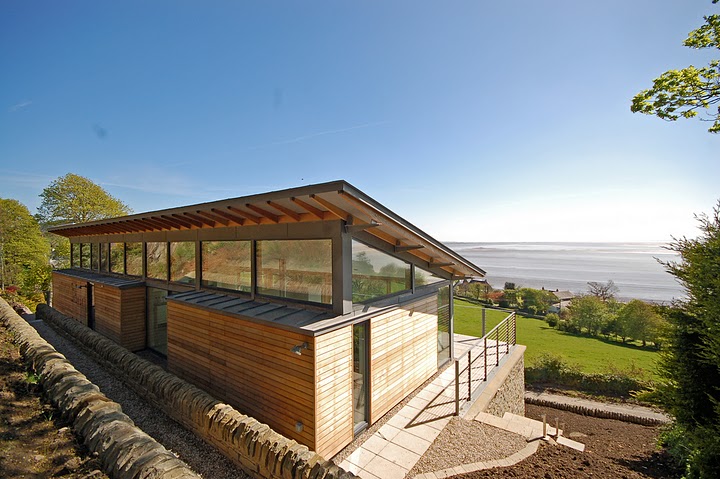
De la tierra – ubicado en el sitio de una antigua cantera, Simon Winstanley arquitectos han creado la perfecta “Viewmaster” en el estuario de Solway, Escocia (National Scenic Area).

Architect
Simon Winstanley Architects

Vía modresdes.blogspot.com

Simon-Winstanley-Architects-Deepstone-Residence-archiblock_002


Información general
El diseño se ajusta a las instrucciones del cliente, contemporáneo y eficiente uso de la energía interior, y se relaciona con el contexto circundante y el paisaje. La luz, primer piso espacioso en contraste el nivel  inferior, minimizando el impacto visual de la casa en el sitio.

El suelo predominantemente acristalamiento superior, dispone de dos salas de estar y una céntrica área de entretenimiento cocina comedor.

Ubicación
El sitio es una cantera de fuerte pendiente, primero en un espacio escénico nacional que desciende abruptamente en dos direcciones de la base de cantera que constituye el nivel de acceso a tierra.
La casa se concibe como un zócalo de piedra que los ecos de la cara de la cantera expuestos y  habitaciones con un garaje y la entrada en a nivel de la base de cantera.

Diseño y Materiales
La principal zona habitable se expresa como un ligero cristal “pabellón” .

Es un retroceso para formar una terraza exterior con vistas al mar y para reducir la masa aparente de la casa.
El pabellón de cristal está construido con una estructura de acero y paneles de madera con aislamiento alto,  y revestido en madera de cedro y triple acristalamiento.

El techo, aunque internamente gruesa para proporcionar altos niveles de aislamiento, está en voladizo en todos los lados con la proyección en vigas de pino oregón para dar un borde fino, elegante.
El techo es de zinc terminado en costuras prefabricadas grises.

La base de mampostería está acabado en piedra de cantera de los residuos reciclados.

El diseño utiliza la construcción más eficiente de la energía y la tecnología cuando sea posible como parte de un enfoque sostenible para la construcción para el futuro:

* Las paredes exteriores, piso y techo están aislados con un alto nivel y la infiltración de aire es mínima.
* Ventanas con triple acristalamiento con cálidos barras del borde separador, con rotura térmica marcos y llenos de gas inerte para lograr un conjunto de ventanas  valor de 0.7W/m2K.
* Bomba de calor con una perforación como la fuente de tierra para la calefacción por suelo radiante y sistema de agua caliente con un bosque cerrado de combustión.
* La microgeneración de electricidad renovable a través de paneles fotovoltaicos montados en el techo.
* Calor toda la casa de recuperación del sistema de ventilación.


English Version

Of the earth – nestled in to the site of a former quarry, Simon Winstanley Architects have created the perfect “viewmaster” in the Solway Firth, Scotland (National Scenic Area).

Overview
The design meets the client’s brief for a contemporary, energy efficient home which fully embraces the view
and relates to the surrounding context and landscape. The light, airy first floor contrasting the solid lower level, minimising the visual impact of the house, nestling it into the site. Open plan, the predominantly glazed top floor, provides two living rooms and a wonderful central entertaining kitchen dining area. Quite how the guests will tear their eyes from the view is another issue all together.

Location
The site is a steeply sloping, former quarry in a National Scenic Area which slopes steeply in two directions from the quarry base which forms the only level ground access.
The house is conceived as a stone plinth which echos the exposed quarry face and houses the bedrooms
with a garage & entrance under at the level of the quarry base.

Layout & Materials
The principal living accommodation is expressed as a lightweight glazed “pavilion” sitting on the solid plinth. It is set back to form an external terrace facing the sea and to reduce the apparent mass of the house.
The glazed pavilion is constructed with a steel frame and highly insulated timber infill panels clad in cedar and triple glazed windows. The roof, although thick internally to provide very high levels of insulation, is cantilevered on all sides with projecting expressed douglas fir rafters to give a thin, elegant leading edge.
The roof is finished in standing seam pre-fabricated grey zinc. The masonry base is finished in stone from re-cycled quarry waste.

The design uses the most energy efficient construction & technology where possible as part of a sustainable approach to building for the future:

* the external walls, floor and roof are insulated to a high standard and air infiltration is minimised.
* triple glazed windows with warm edge spacer bars, thermally broken frames and inert gas filled to achieve a whole window u-value of 0.7W/m2K.
* heat pump using a borehole as the ground source for the underfloor heating and hot water system with a closed combustion wood burning stove as back up.
* micro generation of renewable electricity using roof mounted Photovoltaic Panels.
* whole house heat recovery ventilation system.

Awards
The project has recently received a string of awards – a prestigious Saltire Society Housing Design Award, one of only two awarded this year, a Design Commendation from the Glasgow Institute of Architects and a Chartered Institute of Building Commendation Award. The project was also shortlisted in the Roses Design Awards.

Simon-Winstanley-Architects-Deepstone-Residence-archiblock_008 Simon-Winstanley-Architects-Deepstone-Residence-archiblock_007 Simon-Winstanley-Architects-Deepstone-Residence-archiblock_006 Simon-Winstanley-Architects-Deepstone-Residence-archiblock_005 Simon-Winstanley-Architects-Deepstone-Residence-archiblock_004 Simon-Winstanley-Architects-Deepstone-Residence-archiblock_003 Simon-Winstanley-Architects-Deepstone-Residence-archiblock_001 Simon-Winstanley-Architects-Deepstone-Residence-archiblock Simon-Winstanley-Architects-Deepstone-Residence-archiblock_009

Depósito para canoas, Arquitectura en España

Edificio para alojar canoas en españa, diseñado por Julio Barreno

A nuestro entender es una obra que guarda mucho respeto con su entorno inmediato, que toma consideraciones paisajísticas y las incorpora al lenguaje formal.

Depósito para canoas, Arquitectura en España

Depósito para canoas, Arquitectura en España

Vía: coolboom.net

Julio Barreno | Arquitecto

Se proyecta un edificio para el almacenamiento de canoas como otro punto blanco en el paisaje del Zahara de la Sierra, un pequeño pueblo en el sur de España.

He aquí la descripción del proyecto:

Zahara de la Sierra es un pequeño pueblo en el sur de España. El paisaje está conformado por pequeñas piezas blancas de la vivienda basado en el pequeño tamaño de las parcelas. La vista aérea de este paisaje se define por los píxeles verdes y blancos de las propiedades en esta área.

Esta capacidad para el almacenamiento de las canoas se construye como otro punto blanco en el paisaje.

Tres líneas definen la situación exacta del proyecto en el sitio: La estrecha carretera que va de la secundaria al nivel del agua, la línea de alta tensión que cruzan la parte superior del sitio, y el nivel del embalse de agua de inundación.

Estas condiciones, junto con otras, como el suelo malo para las fundaciones, condicionaban el partido del proyecto.

El edificio es un BY-PASS, conecta el estacionamiento, al comienzo de la carretera secundaria, con el muelle, a nivel del agua, por lo que la propuesta es de un camino entre estos dos puntos. La gente ingresa a través de la entrada de huéspedes en su ropa de diario, y sale por el otro lado con la canoa y ropa deportiva en su camino hacia el agua. En este sentido, el edificio se convierte en un intercambiador, como tope, de un alto en el camino.

Para la construcción de este elemento, se utilizó el material predominante de esta zona, el color blanco como el ingrediente principal e inclinando el techo de tejas color negro con algunos tragaluces blancos diseminados. Estas características confieren al edificio un carácter determinado en el paisaje.

De esta manera, el edificio surge como otro elemento blanco en el espíritu del paisaje nativo de esta región.

English version

Julio Barreno | Arquitecto projected a building for storage of canoes as another white point in the landscape of Zahara de la Sierra, a small village in the south of Spain.

Here is the project description:

Zahara de la Sierra is a small village in the south of Spain. The landscape is shaped by small white pieces of housing based on the small size of the plots. The aerial view of this landscape is defined by the green and white pixels of the properties in this area.

This building for storing canoes is built as another white point in the landscape.

Three lines define the project’s exact situation in the site: The narrow road going from the secondary one to the water level, the overhead power line crossing the upper part of the site, and the reservoir’s flood water level.

These conditions, along with others, like the bad ground for foundations, decide what the building becomes.

The building is a BY-PASS connecting the parking lot, at the beginning of the secondary road, with the jetty, at water level, so the proposal designs a path between these two points. People get in through the guest entry in their everyday clothes, and leave through the opposite exit with the canoe and sports clothes on their way to the water in the reservoir. In this sense, the building becomes an INTERCHANGER, as a stop, a halt in the path.

For the construction of this element, we used the prevalent materials of this area; white color as the main ingredient and inclined black tiled roof with some white disseminated skylights. These characteristics give the building a certain landscape character. It could be called a BUILDING-LANDSCAPE, a CANOES LANDSCAPE.

In this way, the building emerges as another white element in the spirit of this region’s native landscape.

Canoes-landscapes-architecture_006 Depósito para canoas, Arquitectura en España Canoes-landscapes-architecture_004 Canoes-landscapes-architecture_003 Canoes-landscapes-architecture_002 Canoes-landscapes-architecture_001 Canoes-landscapes-architecture Canoes-landscapes-architecture_007

Kurreki House por Bourne Blue Architecture

Kurreki House by Bourne Blue Architecture

Una casa para vacaciones diferente.

The-Kurreki-House-by-Bourne-Blue- Architecture_006

Architect – Bourne Blue Architecture

Vía contemporist.com

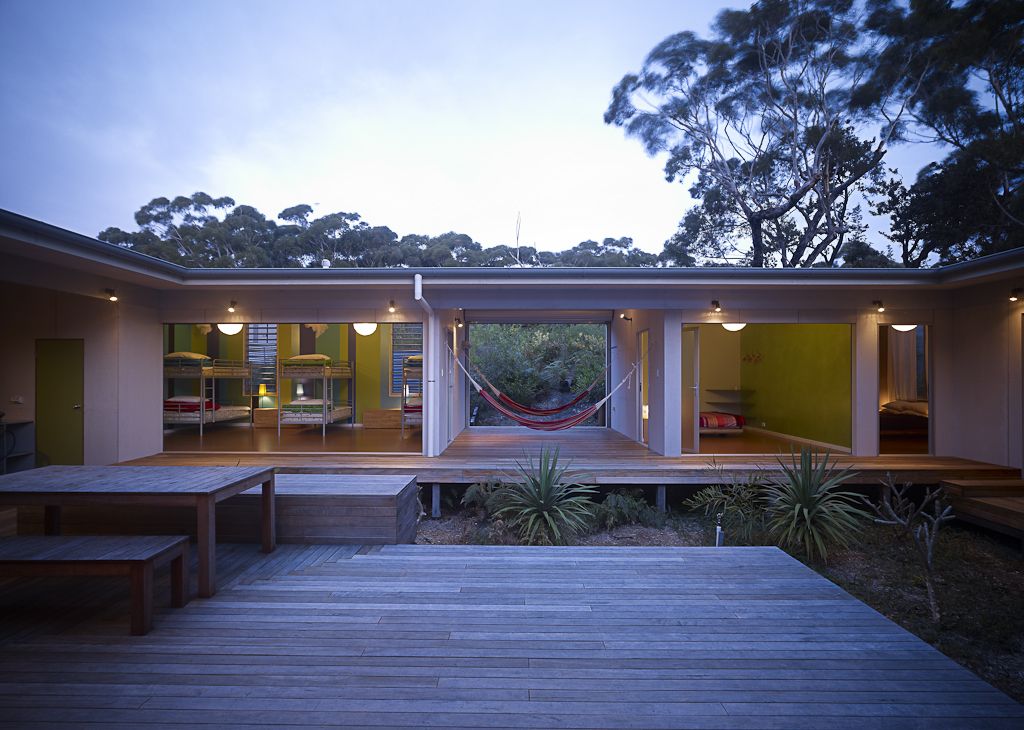
Seal Rocks es un pueblo pequeño y único, muchas viviendas existentes son básicas chozas de pesca, ahora utilizas sobre todo para las vacaciones.

La intención era construir una casa de vacaciones sin complicaciones, que también podrían ser liberados para la renta de alquiler. El enfoque era construir de una manera que conserva el lenguaje de las formas existentes construidas de Seal Rocks y ser respetuoso de contexto.

Hay un ligero aumento en el sitio en la parte trasera y una perspectiva para el monte, delante y detrás. El Servicio de Bomberos Rural colocó un revés 10m en la parte posterior, forzada una valla de fuego y le dictó que todos los edificios de la calle tenían que ser parcialmente zona de flama y el nivel 3 de protección incendios forestales.

El edificio se centra en el espacio central para minimizar la cantidad de cristales exteriores reduciendo así la cantidad de tratamientos costosos. Se mejora el sentido de la vida privada y anexo a la sala de estar al aire libre. El borde que rodea el techo interno permite la circulación protegida bajo el alero, reduce la forma construida y oscurece los interiores y de transición al aire libre. También enmarca una visión del cielo que está animada por la noche por la luz de un faro que pasa por encima.

Kurreki ‘nombre’, (‘Myrtle Bush “en la lengua Worimi), la sensación de la casa es uno de los camping de lujo. Ser capaz de cerrar el perímetro exterior hace que todas las habitaciones se pueden abrir a la cubierta central. Esto le permite dormir bajo mosquiteros, con vistas del cielo nocturno. Un amplio vestíbulo de entrada sombreada es para el almacenamiento de tablas de surf, colgando toallas y trajes de neopreno, mientras una lluvia de arena cercanasse extiende  por toda la casa. El espacio más popular es la cubierta de hamaca a la sombra, que recibe uso constante.

Materiales que buscan relacionarse con el contexto de la aldea, son económicos y resistentes a la corrosión. No hay <materias ciudad> como splashbacks vidrio, cerámica o piedra pulida. Las paredes están cubiertas con revestimiento de 9 mm de CFC y canales de aluminio, al igual que los edificios existentes de fibra. Localmente decking blackbutt blanqueado y techos orbe personalizados son otros materiales dominantes, tanto de los cuales se utilizan en los edificios existentes. Los métodos de construcción y los detalles son intencionadamente básicos, por razones de economía y de trabajo con los comerciantes locales. El acero se trata de evitar y elementos como el sistema de alumbrado exterior sion de plástico, y fueron elegidos tanto por la economía como por su la larga vida.

Los pisos son de partículas de pulido, carpintería de todos los usos formply . El exterior es simple, gris y plata, mientras que el interior está lleno de color, inspirada en rockpools y la vecina selva.

Una granja de humedad trata de aguas residuales, el techo se alimenta y 27000 litros de almacenamiento de agua para uso doméstico, con un 15000L adicionales para lucha contra incendios. Para una protección adicional de una bomba suministra los rociadores contra incendios en la cobertura y el nivel de jardín con la oferta interna. Algunas de estas tierras en el techo, a continuación, vuelve a circular, que se extiende el tiempo de protección.

English version

The Kurreki House by Bourne Blue Architecture

Seal Rocks is a small, unique village, many existing dwellings are basic weatherbeaten fishing shacks, now mostly used for holidays. Thomas road, was developed later and the last 10 blocks in the street only became available in 2003.

The intention was to build an uncomplicated holiday house, which could also be let out for rental income. The existing original cottages are slowly being lost as properties change hands, so the approach was to build in a way that retains the language of the existing built forms of Seal Rocks and to be respectful of context.

There is a gentle rise on the site to the rear and an outlook to the bush, front and rear. The Rural Fire Service placed a 10m setback to the rear, enforced a fire fence and dictated that all the buildings in the street had to be partly flame zone and level 3 bushfire protection.

The building focuses to the central space to minimise the amount of external glazing thus reducing the amount of expensive bushfire treatments. It improves the sense of privacy and enclosure to the outdoor living area. The surrounding internal roof edge allows protected circulation under the eaves, reduces the built form and blurs the indoor/outdoor transition. It also frames a sky view which is animated at night by the lighthouse beam passing overhead.

Named ‘Kurreki’, (‘Bush Myrtle’ in the Worimi language), the feel of the house is one of luxury camping. Being able to close the outer perimeter makes all rooms openable to the central deck. This allows you to sleep under mosquito nets, with a view of the night sky. A wide shaded entry foyer is for storage of surfboards, hanging towels and wetsuits while a shower nearby reduces sand spreading throughout the house. The most popular space is the shady hammock deck, which receives constant use.

Materials throughout relate to the context of the village, are economical and corrosion resistant. There are no ‘city’ materials like glass splashbacks, ceramic tiles or polished stone. The walls are lined with 9mm CFC cladding and aluminium channels, much like the existing buildings of fibro and cover batten. Locally milled blackbutt decking and custom orb roofing are other dominant materials both of which are used in existing buildings. Construction methods and detailing are intentionally basic, for reasons of economy and working in with the local tradesmen. Steel is avoided and items such as the plastic external light fittings, were chosen both for economy and long life. Floors are polished particleboard, all joinery uses formply as a finished face. The exterior is simple, grey and silver, while the interior is colourful, inspired by rockpools and neighbouring bush.

A wet composting worm farm treats sewage, the roof feeds to  27000 L of water storage for domestic use, with an additional 15000L for firefighting. For extra  protection a pump supplies the fire fighting sprinklers at roof and garden level with the domestic supply. Some of this lands on the roof, then recirculates, extending the protection time.

The-Kurreki-House-by-Bourne-Blue- Architecture_005 The-Kurreki-House-by-Bourne-Blue- Architecture_004 The-Kurreki-House-by-Bourne-Blue- Architecture_003 The-Kurreki-House-by-Bourne-Blue- Architecture_002 The-Kurreki-House-by-Bourne-Blue- Architecture_001 The-Kurreki-House-by-Bourne-Blue- Architecture The-Kurreki-House-by-Bourne-Blue- Architecture_007

Casa en Koamicho por Suppose Design Office

Casa-Koamicho-por-Suppose-design-office_002

Los arquitectos japoneses Suppose Design Office han completado una casa en Hiroshima, Japón, donde los residentes se mueven entre habitaciones a través de patios cubiertos.

Casa que llamada Koamicho, es residencia de dos plantas y está situada en una parcela larga y estrecha.

English text at the end

Dos plazas de cristal entre las habitaciones están plantadas con árboles pequeños y procuran romper la sucesión de habitaciones, ofreciendo visiones del exterior.
Los dormitorios están ubicados en la planta baja con cocina, comedor y salas de estar en el primer piso.

Casa-Koamicho-por-Suppose-design-office_013 Casa-Koamicho-por-Suppose-design-office_012 Casa-Koamicho-por-Suppose-design-office_011 Casa-Koamicho-por-Suppose-design-office_010

La siguiente información es de Suppose Design Office :

Casa en Koamicho

Cuando normalmente se dice “interior” o “exterior”,
¿cuáles son las causas? ¿Y cuáles son las causas de la sensación de “abierto” o “estrecho”?

Esta casa está diseñada con mucha atención a cómo, desde las causas, se definen las condiciones de un espacio.

En un espacio largo y estrecho, construimos muros, y por un espacio en el que experimentamos muchas habitaciones, que a su vez “estrechez” en “la apertura.
“Además, teniendo en habitaciones y jardines como equivalentes, hemos creado espacios que son como los exteriores, llamándolos” salas de jardín “.

Casa-Koamicho-por-Suppose-design-office_009 Casa-Koamicho-por-Suppose-design-office_008 Casa-Koamicho-por-Suppose-design-office_007 Casa-Koamicho-por-Suppose-design-office_006 Casa-Koamicho-por-Suppose-design-office_005 Casa-Koamicho-por-Suppose-design-office_004

Al cambiar de habitación a otra habitación, alternativamente, puede experimentar el interior y exterior, y se convierten en el lugar donde todas las habitaciones están conectados con el exterior.
Aquí hemos tenido éxito en la realización de un espacio, que pasan de las definiciones tradicionales  una nueva relación entre – interior y exterior.

Japanese architects Suppose Design Office have completed a house in Hiroshima, Japan, where residents move between rooms through covered courtyards.

Called House in Koamicho, the two-storey residence is situated on a long narrow plot.

Two glazed spaces between rooms are planted with small trees and break up the succession of rooms, affording glimpses of the outside.
Bedrooms are located on the ground floor with kitchen, dining and living areas on the first floor.

Vía dezeen.com
The information below is from Suppose Design Office:

House in Koamicho

When we normally feel “interior” or “exterior”, what are the causes? And what are the causes of feeling “open” or “narrow”?
This is house designed with much thought to how, from those root causes, we define the conditions of a space.

In a long, narrow space, we constructed walls, and by laying out a space in which we experience many rooms, we turn “narrowness” into “openness.
“Further, taking rooms and gardens as equivalent, we created spaces that are like the exteriors, calling them “garden rooms”.

By moving from room to another room, we can alternately experience interior and exterior, and they become the place where every rooms are connected to the exterior.
Here we have succeeded in realizing a space, which pass traditional definitions tomaterialized a new relationship between – interior and exterior.

Casa-Koamicho-por-Suppose-design-office_003 Casa-Koamicho-por-Suppose-design-office_001 Casa-Koamicho-por-Suppose-design-office Casa-Koamicho-por-Suppose-design-office_014