Archived entries for arquitectura contemporánea

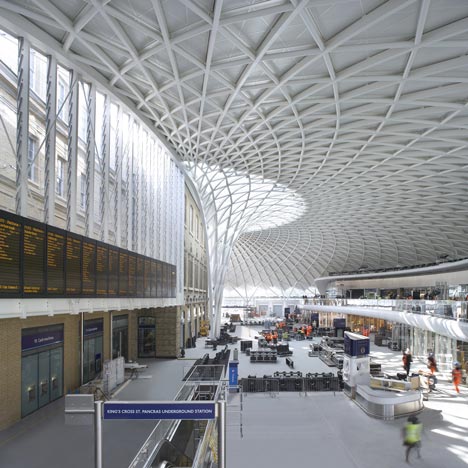
King’s Cross Station in London by John McAslan and Partners

Here’s some more information from John McAslan + Partners:

RANSFORMING KING’S CROSS – LONDON’S HISTORIC STATION ACQUIRES A CONTEMPORARY TWIST

The new Western Concourse at King’s Cross opens to the public on Monday 19th March 2012.


“With this multi-phased development now complete, the significance of the King’s Cross Station redevelopment is finally revealed. The transformation of King’s Cross Station for Network Rail involves three very different styles of architecture: re-use, restoration and new build. The train shed and range buildings have been adapted and re-used, the station’s previously obscured Grade I listed façade is being precisely restored, and a new, highly expressive Western Concourse has been designed as a centrepiece and the ‘beating heart’ of the project. When the station opens to the public next Monday, 19 March, King’s Cross will become a new, iconic architectural gateway to the city, ready for the 2012 London Olympics.


John McAslan + Partners began work on the project in 1998 and established the overall master-plan for the development in 2005. As a result the practice has played a key role in the wider transformation of the King’s Cross area – infrastructural, social and commercial changes that now connect the station with the massive King’s Cross Central scheme north of the station as well as to St Pancras, the London Underground, and the surrounding urban context. The architectural ambition of JMP’s scheme has been to create a new iconic landmark that will function as a key catalyst for the ongoing regeneration of this new London quarter as well as providing striking new facilities that will accommodate the 50 million passengers now passing through the station each year.”

Continue reading…

Bru 1.25 por SOHO Architects

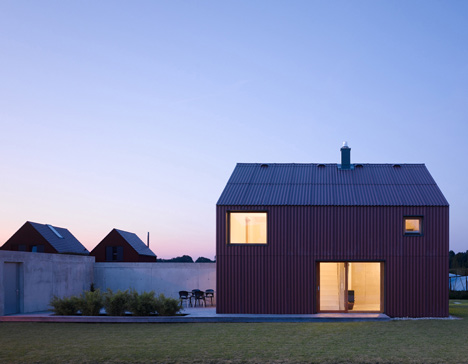
This house is located in Bavaria and placed within a line of architecture that I personally really like, and refers to the maximum expressiveness of building materials.

Esta vivienda está ubicada en Bavaria y se coloca dentro de una línea de arquitectura que en lo personal me gusta mucho, y que refiere a la tectónica o expresividad pura de los materiales de construcción.

Continue reading…

Casa en Koamicho por Suppose Design Office

Casa-Koamicho-por-Suppose-design-office_002

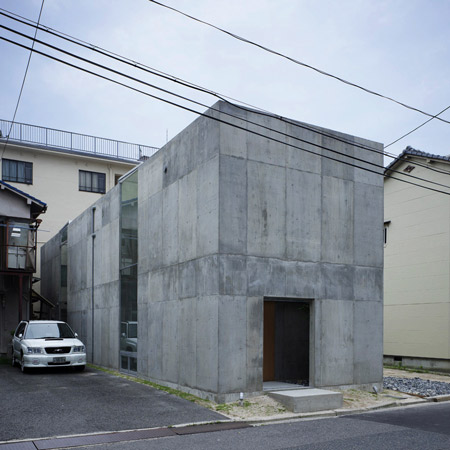
Los arquitectos japoneses Suppose Design Office han completado una casa en Hiroshima, Japón, donde los residentes se mueven entre habitaciones a través de patios cubiertos.

Casa que llamada Koamicho, es residencia de dos plantas y está situada en una parcela larga y estrecha.

English text at the end

Dos plazas de cristal entre las habitaciones están plantadas con árboles pequeños y procuran romper la sucesión de habitaciones, ofreciendo visiones del exterior.
Los dormitorios están ubicados en la planta baja con cocina, comedor y salas de estar en el primer piso.

Casa-Koamicho-por-Suppose-design-office_013 Casa-Koamicho-por-Suppose-design-office_012 Casa-Koamicho-por-Suppose-design-office_011 Casa-Koamicho-por-Suppose-design-office_010

La siguiente información es de Suppose Design Office :

Casa en Koamicho

Cuando normalmente se dice “interior” o “exterior”,
¿cuáles son las causas? ¿Y cuáles son las causas de la sensación de “abierto” o “estrecho”?

Esta casa está diseñada con mucha atención a cómo, desde las causas, se definen las condiciones de un espacio.

En un espacio largo y estrecho, construimos muros, y por un espacio en el que experimentamos muchas habitaciones, que a su vez “estrechez” en “la apertura.
“Además, teniendo en habitaciones y jardines como equivalentes, hemos creado espacios que son como los exteriores, llamándolos” salas de jardín “.

Casa-Koamicho-por-Suppose-design-office_009 Casa-Koamicho-por-Suppose-design-office_008 Casa-Koamicho-por-Suppose-design-office_007 Casa-Koamicho-por-Suppose-design-office_006 Casa-Koamicho-por-Suppose-design-office_005 Casa-Koamicho-por-Suppose-design-office_004

Al cambiar de habitación a otra habitación, alternativamente, puede experimentar el interior y exterior, y se convierten en el lugar donde todas las habitaciones están conectados con el exterior.
Aquí hemos tenido éxito en la realización de un espacio, que pasan de las definiciones tradicionales  una nueva relación entre – interior y exterior.

Japanese architects Suppose Design Office have completed a house in Hiroshima, Japan, where residents move between rooms through covered courtyards.

Called House in Koamicho, the two-storey residence is situated on a long narrow plot.

Two glazed spaces between rooms are planted with small trees and break up the succession of rooms, affording glimpses of the outside.
Bedrooms are located on the ground floor with kitchen, dining and living areas on the first floor.

Vía dezeen.com
The information below is from Suppose Design Office:

House in Koamicho

When we normally feel “interior” or “exterior”, what are the causes? And what are the causes of feeling “open” or “narrow”?
This is house designed with much thought to how, from those root causes, we define the conditions of a space.

In a long, narrow space, we constructed walls, and by laying out a space in which we experience many rooms, we turn “narrowness” into “openness.
“Further, taking rooms and gardens as equivalent, we created spaces that are like the exteriors, calling them “garden rooms”.

By moving from room to another room, we can alternately experience interior and exterior, and they become the place where every rooms are connected to the exterior.
Here we have succeeded in realizing a space, which pass traditional definitions tomaterialized a new relationship between – interior and exterior.

Casa-Koamicho-por-Suppose-design-office_003 Casa-Koamicho-por-Suppose-design-office_001 Casa-Koamicho-por-Suppose-design-office Casa-Koamicho-por-Suppose-design-office_014

Casa 9×9 in Stadtbergen, Alemania

titus-bernhard-architekten-stone-house_001

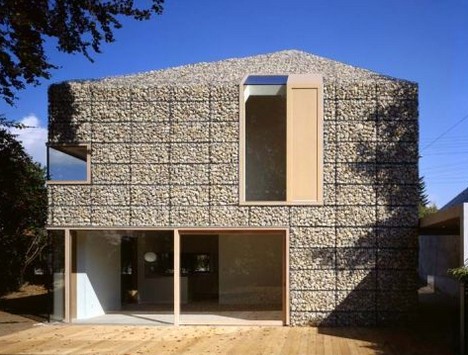
Esta es una obra que procura una envolvente de piedra para la vivienda, que aun mismo tiempo busca hacer uso de las cualidades térmicas de los materiales y de su expresividad plástica.

“Tomando como referente el proyecto de “Napa Valley” de Herzog & de Meuron, la envolvente exterior (fachadas y cubierta), se resolvió mediante “jaulas” rellenos de manpostería.

titus-bernhard-architekten-stone-house_008 titus-bernhard-architekten-stone-house_007

Descripción de la solución constructiva:

La piel exterior se ha construido Mediante contenedores (gaviones) Prismáticos de 100 × 50x12cm construidos con enrejado electro soldado de acero galvanizado, que se han rellenado con piedra tosca manualmente tipo “dolomia del Valle del Almühl” (80/120mm grano) Dispuestos Con las juntas verticales y horizontales continuas, formando una Retícula regular. La piel exterior se ha construido mediante contenedores (gaviones) prismáticos de 100×50x12cm construidos con enrejado electro soldado de acero galvanizado, que se han rellenado manualmente con piedra tosca tipo “dolomía del Valle del Almühl” (grano 80/120mm) dispuestos con las juntas verticales y horizontales continuas, formando una retícula regular.

Los contenedores se han Fijado al muro interior de hormigón armado de 22cm de espesor que, mediante un sistema de anclajes metálicos formado por: carril de chapa de acero plegada de 3 mm de espesor y perfil Halen 52/35 mm. Los contenedores se han fijado al muro interior de hormigón armado de 22cm de espesor, mediante un sistema de anclajes metálicos formado por: carril de chapa de acero plegada de 3mm de espesor y perfil Halen 52/35 mm. El carril se fija a la pared de hormigón, de Manera puntual, con perfiles de acero L 140 × 70x10mm solados de una placa de anclaje de 200 × 150mm montada embebida en el hormigón armado. El carril se fija a la pared de hormigón, de manera puntual, con perfiles de acero L 140×70x10mm solados a placa de anclaje de 200×150mm montada embebida en el hormigón armado.

titus-bernhard-architekten-stone-house_009 titus-bernhard-architekten-stone-house_005 titus-bernhard-architekten-stone-house_004

Los puntos de fijación permiten  separar los carriles de la Pared El Suficiente espacio para el paso continuo del aislante térmico de espuma rígida de poliestireno extruido de 140mm de espesor, instalado previa impermeabilización con mastico bituminoso (5mm). Los puntos de fijación permiten separar los carriles de la pared el espacio suficiente para el paso continuo del aislante térmico de espuma rígida de poliestireno extruido de 140mm de espesor, instalado previa impermeabilización con mástico bituminoso (5mm).”

Vía afasiaarq.blogspot.comJudit bellostes

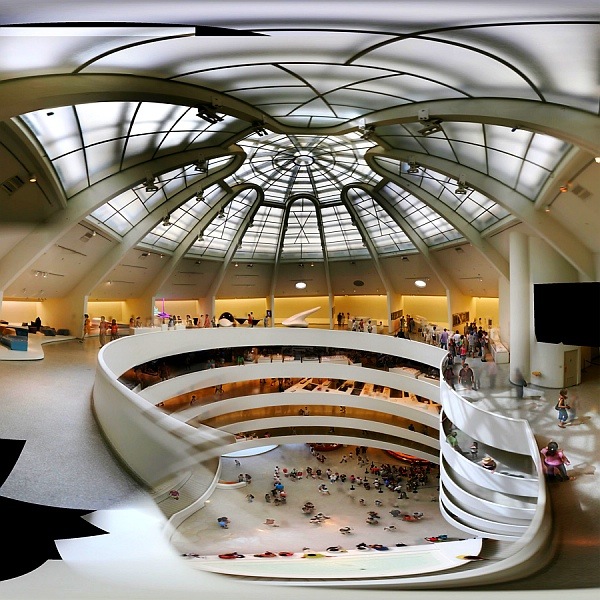
Guggenheim NY celebra 50 años

museum-Guggenheim-frank-lloyd-wright-new-york_005

Guggenheim es un arte en sí mismo.

Cuando el propietario del nombre es retirado de su propia compañía en 1919, estaba lejos de pensar que su hobby de coleccionista de arte le convertiría en el creador de una de las mayores fundaciones en el mundo del arte y uno de los museos más importantes del arte contemporáneo: el Museo Solomon R. Guggenheim.

museum-Guggenheim-frank-lloyd-wright-new-york_001

museum-Guggenheim-frank-lloyd-wright-new-york

Vía : networkedblogs.com

Frank Lloyd Wright recibió el encargo de diseñar este edificio, y después de 700 bocetos, presentó el proyecto final, que finalmente no solo sería una de sus últimas obras, sino también una de los más populares. El arquitecto murió seis meses antes de consumada la inauguración del edificio, así como el creador de la fundación, que murió 10 años antes del evento.

Como muchas de las creaciones de Wright, el Guggenheim destaca por su arquitectura de  vanguardia y ecológica dada a los valores de los espacios abiertos, mucha luz natural. En sus propias palabras “en comparación con el Guggenheim, el Museo Metropolitano de Arte se parece a un establo protestante.”

A pesar de las quejas, incluyendo el New York Times que lo consideró una repetición de la arquitectura y la pintura, el museo se ha convertido en un referente del arte contemporáneo, y se amplió en 1992. Hoy en día, la fundación ha crecido y también hay museos Guggenheim en Venecia, Berlín y Bilbao, que establecen el culto del arte no-objetivo. También hay planes para construir más museos en Abu Dhabi (Emiratos Árabes emigrantes), Guadalajara (México) y  Vilnius (Lituania).

El museo celebra el aniversario de oro con dos exposiciones especiales durante todo el año: las adquisiciones para la inauguración de 1959 y Kansinsky, está última todavía en curso.

museum-Guggenheim-frank-lloyd-wright-new-york_004

museum-Guggenheim-frank-lloyd-wright-new-york_003

museum-Guggenheim-frank-lloyd-wright-new-york_006

Guggenheim is an art in itself. When the owner of the name is removed from his own company in 1919, was far from thinking that his hobby of art collector would make him the creator of a of the largest foundations in the world of art and one of the most important art museums contemporary Museum Solomon R. Guggenheim.

Frank Lloyd Wright was commissioned to design this building, and after 700 sketches, presented the final project, which eventually would be not only one of his last works, but also one of the most popular. The architect died six months before the inauguration of the building accomplished and the creator of the foundation, who died 10 years before the event. Like many of Wright’s creations, the Guggenheim is notable for its avant-garde architecture and ecological values given to open spaces, abundant natural light. In his own words ” compared with the Guggenheim, the Metropolitan Museum of Art is like a Protestant barn. ”
Despite the complaints, including the New York Times that he considered a repetition of the architecture and painting, the museum has become a landmark of contemporary art, and was expanded in 1992. Today day, the foundation has grown and there are Guggenheim museums in Venice, Berlin and Bilbao, which establish the cult of nonobjective art. There are also plans to build more museums in Abu Dhabi (United Arab emigrants), Guadalajara (Mexico) and Vilnius (Lithuania).
The museum celebrates the golden anniversary with two special exhibitions throughout the year: the procurement for the opening of 1959 and Kansinsky, the latter still ongoing.

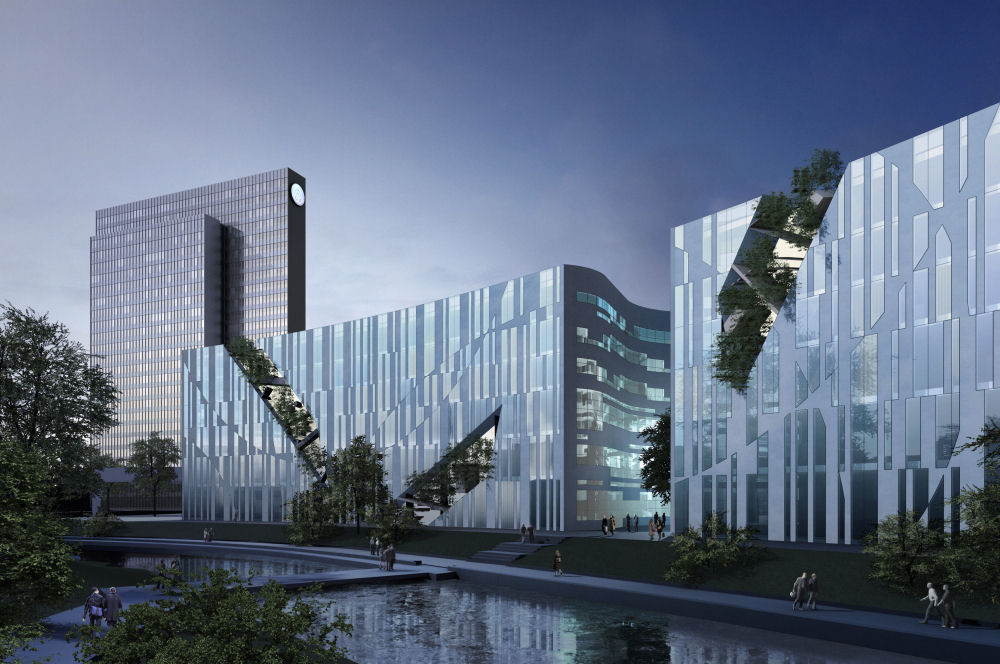
Kö-Bogen, Complejo de cristal por Daniel Libeskind

Project-of-the-Century-Daniel-Libeskind-archiblock_003

Kö-Bogen, es un nuevo complejo de oficinas de venta al por menor para el centro de Düsseldorf, marca una importante transición entre el espacio urbano y el paisaje. A dos cuadras de la ciudad se unen con una línea de techo continuo, formando un espacio unificado para caminar, ir de compras y al trabajo.

Kö-Bogen está situado a lo largo del Boulevard Koenigsallee y estará relacionada con la altura y la expresión, así como en el diseño de las fachadas y materiales, y a los edificios tradicionalmente alineados de este gran espacio urbano.

Project-of-the-Century-Daniel-Libeskind-archiblock_002

Project-of-the-Century-Daniel-Libeskind-archiblock

Con sus techos verdes, Kö-Bogen ayuda a configurar la conexión entre la Koenigsallee y el Hofgarten, forman un único espacio verde continuo desde el centro de la ciudad al parque central. Las proporciones de vidrio y piedra en Ko-Bogen responder a las fachadas adyacentes al Koenigsallee y esta prevalencia de la piedra natural, especialmente la de piedra caliza local, fortalece el contexto histórico del proyecto.

Existe la exigencia de que, debido a su contexto histórico, las líneas del edificio reflejan las de la Koenigsallee y Hofgarten. SDL, creando así un diseño que incorpora los elementos de la ciudad, utilizando la geometría de rectas y curvas para reflejar el paisaje alrededor de Kö-Bogen, líneas rectas se pretende reflejar el contexto de la ciudad y las líneas curvas son para crear conexiones más fluidas con el entorno peatonal.

Otro de los retos planteados por el cliente son los distintos requisitos para las fachadas al por menor y las fachadas de oficinas en Ko-Bogen una vez que se logra una apariencia homogénea. Para designar estas áreas, SDL creó sutiles variaciones en los patrones de ventanas y los cristales que controlar adecuadamente las restricciones de energía diferentes de cada oficina o comerciales de la zona. Para mantener la homogeneidad, las fachadas son curvas hacia los patios interiores para crear un espacio fluido, vinculados de este a oeste por un puente que conecta con la terraza de la azotea.

Vía: inhabitat.com

Project-of-the-Century-Daniel-Libeskind-archiblock

Kö-Bogen, a dynamic new office and retail complex for downtown Düsseldorf, marks an important transition between urban space and landscape. Two city blocks are joined with one continuous roof line, forming a unified space for walking, shopping and working.

Kö-Bogen is situated along the Köenigsallee Boulevard and will relate in height and expression, as well as in façade design and material, to the traditionally-aligned buildings of this great urban space. With its green rooftops, Kö-Bogen helps shape the connection between the Köenigsallee and the Hofgarten, forming one continuous green space from the city center to the great central park. Proportions of glass and stone at Kö-Bogen respond to the adjacent facades at Köenigsallee and this prevalence of natural stone, particularly that of local limestone, strengthens the historical context of the project.

There were several challenges posed by the client, die developer, in realizing the Kö-Bogen project. One of these was the requirement that, due to its historical context, the lines of the building reflect those of the Koenigsallee and Hofgarten. SDL thus created a design that incorporates the city elements, using both straight and curved geometry to reflect the landscape around Kö-Bogen; straight lines are meant to reflect the city context and curved lines are meant to create more fluid connections with the pedestrian environment.

Another challenge posed by the client was the differing requirements for the retail facades and the office facades at Kö-Bogen while still achieving a homogenous appearance. To designate these areas, SDL created subtle variations in the window patterns and glass that appropriately control the different energy restrictions of each office or retail area. To maintain homogeneity, the facades are curved toward the interior courtyards to create a fluid space, linked from east to west by a connecting bridge with roof terrace.

This summer die developer announced that Kö-Bogen had officially secured funding to begin construction in early 2010, a great achievement during such tough economic times.

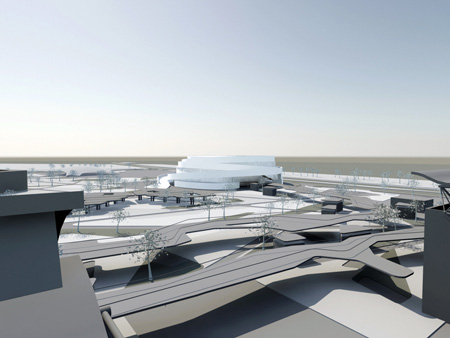
IRAPUATO Music Hall y CENTRO DEPORTIVO por Tatiana Bilbao

Irapuato-Music-Hall-and-Sports-Centre-by-Tatiana-Bilbao

IRAPUATO Music Hall y CENTRO DEPORTIVO por Tatiana Bilbao

El edificio circular acogerá una gran variedad de eventos, como conciertos de música internacional, peleas de box, eventos universitarios o espectáculos tradicionales mexicanos.

Irapuato, Guanajuato, México

Este escenario está equipado con la tecnología de este tipo en la acústica y la iluminación que incluso la gente sentada en las filas de atrás (por lo que 23 metros de la etapa) disfrutarán de su programa favorito.

Vía: dezeen.com

Irapuato-Music-Hall-and-Sports-Centre-by-Tatiana-Bilbao_016

Irapuato-Music-Hall-and-Sports-Centre-by-Tatiana-Bilbao_015

La forma característica exterior, como resultado del programa de interiores, también incluye bares, restaurantes y terrazas que da vida a la construcción cotidiana, aunque el interior no se utiliza.

Este edificio situado en su INFORUM el Congreso y el parque de hadas, situado en el norte de la ciudad de Irapuato.

Irapuato-Music-Hall-and-Sports-Centre-by-Tatiana-Bilbao_008

Irapuato-Music-Hall-and-Sports-Centre-by-Tatiana-Bilbao_003

Irapuato-Music-Hall-and-Sports-Centre-by-Tatiana-Bilbao_002

Este estudio multidisciplinario tiene una arquitectura como su práctica principal, con proyectos en México y varios países alrededor del mundo.

Además, la oficina constantemente organiza exposiciones y programas diferentes, por lo tanto la promoción de la cultura contemporánea.

La oficina se desarrolla la arquitectura que abarca una amplia gama de tipologías, son los ejemplos principales: una casa para el artista Gabriel Orozco en el Océano Pacífico, una casa de 1388 m2 en comunidad cerrada Ordos (China), el Jardín Botánico de Culiacán o de la funeraria Tangassi en San Luis Potosí, sala de exposiciones de arquitectura en Jinhua Park y el Pabellón de México en la Expo Zaragoza 2008.

En 1999 co-funda Tatiana Bilbao la Oficina de Laboratorio de la Ciudad de México SC (LCM).

Desde 2004 ha sido profesora visitante en universidades como la Universidad Iberoamericana en Ciudad de México y la Universidad Andrés Bello en Santiago de Chile.

Mexican architect Tatiana Bilbao has designed a music hall and sports centre for Irapuato, Mexico.
Called Irapuato Music Hall and Sports Centre, the five-storey circular building would host musical and sporting events in one central hall.
Shaped around this interior, the exterior of the building would incorporate bars, restaurants and terraces.
More about Tatiana Bilbao on Dezeen: Biotechnological Park Building.

Here’s some information from the architects:

IRAPUATO MUSIC HALL AND SPORTS CENTER
Irapuato, Guanajuato, México
Irapuato Music Hall and Sports Center will be a multipurpose building.
The five level circular building will host a wide variety of events, such as international music concerts, box fights, college events or traditional Mexican shows.
This arena is equipped with such a technology in acoustics and illumination that even the people seated in the back rows (as far as 23 meters from the stage) will enjoy their favorite show.
The exterior characteristic shape, resulting from the interior program, also includes bars, restaurants and terraces which brings life to the building everyday, even if the interior is not being used.
This building its situated in the INFORUM congress and fairy park, located at the north of Irapuato city.
TATIANA BILBAO S.C.
Tatiana Bilbao S.C. was founded in 2004 by Mexican architect Tatiana Bilbao Spamer.
This multidisciplinary studio has architecture as its main practice with projects in Mexico and various countries around the world.
In addition, the office constantly organizes different exhibitions and programs, therefore promoting contemporary culture.
The office develops architecture covering a wide range of typologies, being the main examples: a house for the artist Gabriel Orozco in the pacific ocean, a 1388 m2 gated community house in Ordos (China), a Botanical Garden in Culiacan or the Tangassi funeral home in San Luis Potosi, an Exhibition Room in Jinhua Architectural Park and the Mexican Pavilion for the Expo Zaragoza 2008.
In 1999 Tatiana Bilbao co-founds the Office Laboratorio de la Ciudad de Mexico S.C.(LCM).
Since 2004 she has been a visiting professor in Universities such as Universidad Iberoamericana in Mexico City and Universidad Andres Bello in Santiago de Chile.
In 2007 Tatiana Bilbao was recognized by Design Vanguard Prize for being one of the 10 most influential, young practices of the world.

La Aldea Mundial de Deportes de la Mujer, por BIG

villa-mundial-del-deporte-femenino-BIG-arquitectos_004

Los arquitctos daneses de BIG han ganado un concurso para diseñar un centro de investigación, educación y capacitación acerca de los deportes de la mujer en Malmo, Suecia.

Llamado La Aldea Mundial de Deportes de la Mujer, el proyecto está concebido como una serie de edificios de diferentes tamaños, con techos inclinados, alternando con espacios abiertos.

villa-mundial-del-deporte-femenino-BIG-arquitectos_005

villa-mundial-del-deporte-femenino-BIG-arquitectos_002

Vía: dezeen.com

La sala principal puede acoger partidos de fútbol, conciertos, conferencias, exposiciones y mercados.

Aquí hay más información de BIG:

BIG, en colaboración con AKT, Tyréns y Transsolar se adjudicó el primer lugar en un concurso de diseño en Malmo, Suecia para 100.000m2 primero de  instalaciones deportivas.
La Aldea Mundial de Deportes de la Mujer tiene por objeto crear un lugar de reunión natural para la investigación, la educación y la formación en todos los ámbitos relacionados con el desarrollo de la mujer en el deporte.
Situado en el centro de Malmo, los 100.000 m2 de instalación crearán un punto de referencia regional y de atracción para la zona.

villa-mundial-del-deporte-femenino-BIG-arquitectos_003

El diseño ganador fue seleccionado entre cinco documentos presentados por un jurado, compuesto por el fundador y principal financista de la Aldea Mundial de Deportes de la Mujer, Kent Widding Persson, el co-fundador y empresario Martín Hedlund, de la ciudad de Malmo Arquitectos, Ingemar Graahamn y Arquitectos Mats Jacobson y Cecilia Hansson junto con representantes de la ciudad de Malmo.
“El diseño de BIG pone gran énfasis en la arquitectura adaptada a las mujeres con un ambiente sin restricciones y una sensación de bienestar. Los arquitectos ven la WVOWS como una ciudad dentro de una ciudad en lugar de un complejo deportivo. El factor decisivo ha sido el enfoque holístico y la impresión global del diseño – la habilidad de interactuar con el barrio y el medio ambiente y la creación de viviendas atractivas y funcionales al mismo tiempo.” Mats Jacobson, Miembro del Jurado, WVOWS

Compuesto como un pueblo en lugar de un complejo deportivo de la WVOWS combina edificios individuales con una variedad de usos de espacios abiertos y jardines públicos.
El paisaje de las azoteas con pendiente y alternando los volúmenes de construcción de proporcionar el complejo con la identidad variable de un pequeño pueblo lo que reduce su escala para el barrio adyacente.
Las calles interiores de animación a través de funciones públicas, se asemejan a un centro de la ciudad medieval, el apoyo a todos los aspectos de la vida humana – la vida generosa, trabajar y el jugar intensivo.

La sala central es lo suficientemente grande para dar cabida a partidos de fútbol profesional, así como conciertos, conferencias, exposiciones. En lugar de ser un espacio introvertido deportes aislados de la ciudad que lo rodea – aparece como un abierto y acogedor espacio público, visible desde todas las calles de los alrededores – ofrecido generosamente su vida interior a los transeúntes.
“El WVOWS combina altos niveles de ambición en el espacio público y el alojamiento privado, de vida y de trabajo, la salud y la recreación, el deporte y la cultura. Como un pueblo en lugar de un complejo deportivo y que combina la utopía moderna de la Kronprinsen vecinas, con la escala íntima y la especificidad del centro de la cercana ciudad histórica de Malmo. “Bjarke Ingels, Socio a cargo, BIG

“Desde el campo de fútbol principal en su corazón, a los gimnasios y auditorios, de las salas de balonmano de la universidad a los laboratorios de los centros de salud, es todo un pueblo comprometido con el deporte”. Nanna Gyldholm Moller, Jefe de Proyecto, BIG

Danish architects BIG have won a competition to design a centre for research, education and training about women’s sports in Malmo, Sweden.

Called The World Village of Women Sports, the project is conceived as a series of buildings of varying size with sloping roofs, alternating with open spaces.

The main hall will be able to accommodate football matches, concerts, conferences, exhibitions and markets.

Here’s some more information from BIG:

BIG, in collaboration with AKT, Tyréns and Transsolar are awarded first place in a design competition in Malmo, Sweden for a 100.000m2 first of its kind sports facility.
The World Village of Women Sports seeks to create a natural gathering place for the research, education and training in all areas connected to the development of women’s sports.
Located in the centre of Malmo, the 100.000 m2 facility will create a regional landmark and new attraction for the area.

The winning design was chosen among five submissions by a jury, comprised of the founder and main financier of the World Village of Women Sports, Kent Widding Persson, the co-founder and entrepreneur Maarten Hedlund, City of Malmo Architect,Ingemar Graahamn and Architects Mats Jacobson and Cecilia Hansson together with representatives from the City of Malmo.
“BIGs design places great emphasis on architecture tailored to women with an unconstrained atmosphere and a feeling of well-being. The architects see the WVOWS as a town within a town rather than just a sports complex. The decisive factor has been the holistic approach and the overall impression of the design – the ability to interact with the neighborhood and environment, and creating attractive housing and functions at the same time.” Mats Jacobson, Jury Member, WVOWS

Composed as a village rather than a sports complex the WVOWS combines individual buildings with a variety of uses with open spaces and public gardens.
The sloping roofscapes and alternating building volumes provide the complex with the varying identity of a small village thus reducing its scale to the adjacent neighborhood.
The interior streets animated through public functions resemble a medieval downtown, supporting all aspects of human life – generous living, work and intensive play.
“Considering the special requirements of women of all cultures and all ages, special attention has been given, to provide the sports village with a feeling of intimacy and well being often lacking in the more masculine industrial-style sports complexes that are more like factories for physical exercise, than temples for body and mind.” Bjarke Ingels, Partner-In-Charge, BIG

The central hall is large enough to accommodate professional football matches as well as concerts, conferences, exhibitions and flea markets. Rather than being an introverted sports arena shut off from the surrounding city – it appears like an open and welcoming public space, visible from all of the surrounding streets – generously offering its interior life to the passers-by. The pedestrian network around the main sports hall plugs into the surrounding street networks as well as the interior galleries of Kronprinsen, turning it into a complete ecosystem of urban life.
“The WVOWS fuses high levels of ambition within public space and private accommodation, living and working, health and recreation, sport and culture. Like a village rather than sports complex it merges the modern utopianism of the neighboring Kronprinsen with the intimate scale and specificity of the nearby historical city center of Malmo.” Bjarke Ingels, Partner-In-Charge, BIG

“From the main football field at its heart, to the gyms and auditoria, from the handball halls of the university to the laboratories of the health facility, it is an entire village committed to sport.” Nanna Gyldholm Moller, Project Leader, BIG